



Crypto investing feels overwhelming when you’re starting out. Where do you buy? Which coins are safe? How do you protect your money from hackers or market crashes? This guide cuts through the confusion with a disciplined, step-by-step approach. You’ll learn how to choose secure platforms, build a diversified portfolio, and protect your assets while targeting realistic returns. By the end, you’ll have the confidence to invest in crypto safely and profitably.
Table of Contents
- Prerequisites And Preparation
- Selecting Secure Investment Platforms
- Investment Strategies
- Securing Your Crypto Assets
- Common Mistakes And How To Avoid Them
- Expected Results And Outcomes
- Explore Our Crypto Investment Resources
Key Takeaways
| Point | Details |
|---|---|
| Prerequisites matter | Understand blockchain and set clear financial goals before investing. |
| Platform security is critical | Choose only regulated exchanges with proof of reserves and transparent fees. |
| Strategy beats timing | Dollar cost averaging and diversification reduce risk and improve long term results. |
| Storage protects gains | Cold wallets and hardware devices keep your crypto safe from hackers and loss. |
| Discipline wins | Avoid emotional trading, high leverage, and chasing hype for consistent profits. |
Prerequisites and Preparation
You need a solid foundation before putting money into crypto. Think of it like learning to drive. You wouldn’t get behind the wheel without understanding how a car works, right? The same applies here.
Start by grasping blockchain basics. A blockchain is a digital ledger that records transactions across many computers. No single entity controls it, which makes crypto decentralized and secure. Private keys are your digital passwords. Lose them, and you lose your crypto forever. Understanding these fundamentals prevents costly mistakes.
Next, learn the difference between asset types. Blue chip coins like Bitcoin and Ethereum have proven track records and market dominance. They’re your portfolio anchors. Smaller tokens offer higher growth potential but carry more risk. Check out the best cryptocurrencies for 2026 to see which assets match your goals.
Set clear financial goals now. Are you saving for retirement in 10 years? Building wealth over 3 years? Your timeline shapes your strategy. Write down your target return, risk tolerance, and investment horizon. This clarity keeps you disciplined when markets swing wildly.
Pro tip: Before investing a single dollar, practice with a demo account or paper trading. Many exchanges offer simulated trading environments where you can test strategies without real money at stake.
Prepare your tools in advance. You’ll need a verified exchange account, a secure wallet for storage, and a portfolio tracker to monitor performance. Having these ready streamlines your first purchase and reduces stress. Visit this crypto investment 2026 guide for detailed setup steps.
Selecting Secure Investment Platforms
Your exchange choice directly impacts your security and costs. A bad platform can mean frozen funds, excessive fees, or even total loss if the exchange collapses.
Regulatory compliance comes first. Choose exchanges with proof of reserves, local licenses, and transparent operations. Proof of reserves means the platform holds enough actual crypto to cover all user balances. This prevents insolvency disasters like the FTX collapse. Look for exchanges registered with financial authorities in your country.
Liquidity and fees matter for your returns. High liquidity means you can buy or sell quickly without price slippage. Trading fees vary widely, from 0.1% to 1% per transaction. Over time, these add up. Compare fee structures across platforms before committing. The table below breaks down key factors:
| Exchange | Proof of Reserves | Trading Fee | Liquidity | Regulatory Status |
|---|---|---|---|---|
| Coinbase | Yes | 0.5% | High | US regulated |
| Kraken | Yes | 0.16% | High | Global licenses |
| Binance | Partial | 0.1% | Very High | Multiple jurisdictions |
| Gemini | Yes | 0.35% | Medium | US regulated |
Security features protect your funds from hackers. Prioritize platforms with mandatory two factor authentication, cold storage for most funds, and regular third party audits. Strong KYC processes verify user identities, reducing fraud and money laundering risks. These steps might seem tedious, but they safeguard your investment.
Pro tip: Never keep large amounts on exchanges long term. Use them for trading only, then transfer holdings to your personal wallet. Exchanges are targets for hackers because they hold billions in crypto.
Explore top cryptocurrencies 2026 to understand which assets your chosen exchange supports. Not all platforms offer every token, so match your platform to your investment targets. Read more about secure crypto exchanges to deepen your platform evaluation skills.
Investment Strategies
How you invest matters more than when you invest. Smart strategies smooth out volatility and build wealth systematically.
Dollar cost averaging is your best friend. Instead of buying all at once, invest fixed amounts at regular intervals. This approach reduces timing risk because you buy at various price points. Dollar cost averaging over 1 to 3 years yields positive returns on major coins despite market swings. Here’s how to implement it:
- Decide your total investment amount and timeframe.
- Divide the total by the number of weeks or months in your timeframe.
- Set up automatic purchases on your exchange for each interval.
- Never skip a purchase, even when prices are high.
- Track your average cost per coin to measure progress.
Diversification spreads your risk across multiple assets. Allocate 60 to 70% to established coins like Bitcoin and Ethereum. Put 20 to 30% into mid cap tokens with strong use cases. Reserve 5 to 10% for high risk, high reward projects. This balance protects your portfolio if one asset crashes while giving you upside exposure.

Focus on utility and fundamentals. Coins that solve real problems or generate revenue tend to survive bear markets. Look for projects with active development, growing user bases, and clear roadmaps. Avoid tokens hyped purely on social media buzz. Speculation fades fast, but utility lasts.
Key investment approaches and their tradeoffs:
- Long term holding: Lower stress, ride out volatility, compound gains over years. Requires patience and emotional discipline.
- Active trading: Potential for higher returns, but demands time, skill, and nerve. Most beginners lose money trying this.
- Staking and yield: Earn passive income on holdings. Risk varies by platform and token. Research carefully before locking funds.
Stay informed about market developments. Recent crypto ETF filings show institutional adoption growing, which can drive prices higher. Read crypto investing strategies 2026 for deeper tactical insights.
Securing Your Crypto Assets
Protecting your crypto is as important as buying it. Hacks and losses cost investors billions annually, but simple security steps prevent most disasters.
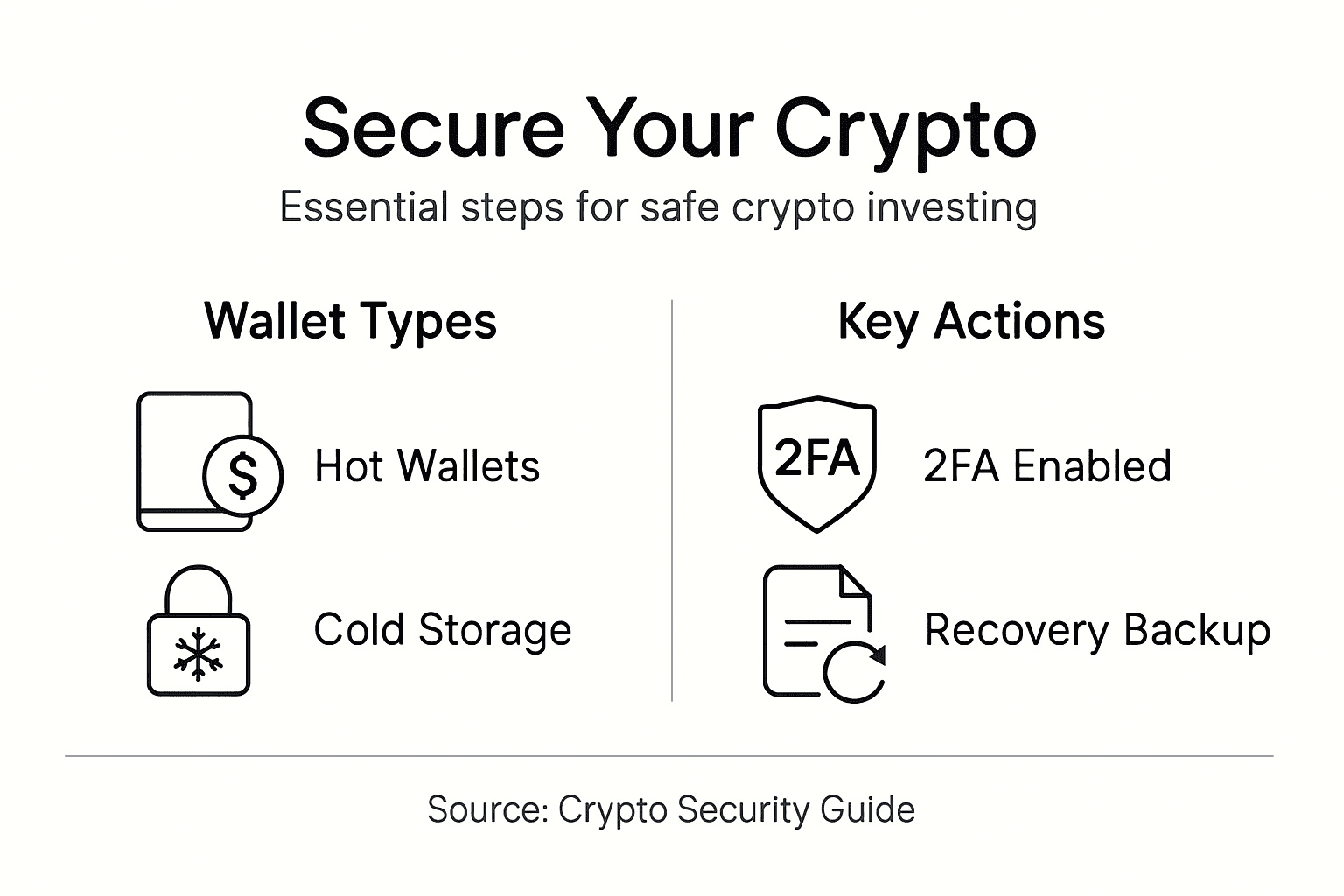
Understand wallet types first. Hot wallets connect to the internet for easy access. They’re convenient for trading but vulnerable to hacks. Cold wallets stay offline, making them nearly immune to online attacks. For long term holdings, cold wallets significantly reduce hacking risks and provide peace of mind.
Hardware wallets are the gold standard for security. These physical devices store your private keys offline. Even if your computer gets infected with malware, your crypto stays safe. Compare popular options below:
| Wallet | Security Features | Ease of Use | Price Range | Best For |
|---|---|---|---|---|
| Ledger Nano X | Secure chip, Bluetooth | Moderate | $150 | Multiple coins, mobile use |
| Trezor Model T | Open source, touchscreen | Easy | $200 | Privacy advocates, large portfolios |
| KeepKey | Large display, simple setup | Very easy | $50 | Beginners, basic needs |
| Coldcard | Bitcoin only, air gapped | Advanced | $150 | Bitcoin maximalists, high security |
Buy hardware wallets only from official vendors. Scammers sell tampered devices that steal your funds. Never buy from third party resellers or auction sites. Order directly from manufacturer websites.
Enable two factor authentication on every account. Use authenticator apps like Google Authenticator or Authy, not SMS codes. SMS can be intercepted through SIM swapping attacks. Write down your backup codes and store them securely offline.
Backup your recovery phrases properly. When you create a wallet, you receive a 12 or 24 word recovery phrase. This phrase restores access if your device breaks or gets lost. Write it on paper or metal, never digitally. Store copies in multiple secure locations like safes or safety deposit boxes.
Pro tip: Test your backup recovery process with a small amount before trusting it with large holdings. Create a wallet, send a tiny amount, delete the wallet, then restore it using your backup phrase. This confirms everything works correctly.
Regularly update your security practices. As threats evolve, so should your defenses. Check for firmware updates on hardware wallets quarterly. Review your access logs on exchanges monthly for suspicious activity. Learn more about secure crypto storage and read additional tips at crypto asset security.
Common Mistakes and How to Avoid Them
Beginner mistakes cost more than market downturns. Recognizing these pitfalls keeps your capital safe and your strategy on track.
Emotional trading destroys portfolios. You see prices pumping and fear missing out, so you buy at the top. Then prices crash and panic makes you sell at the bottom. This cycle repeats until your money’s gone. Avoid emotional overtrading by defining clear entry and exit points before every trade.
Studies show that over 70% of beginner crypto losses stem from emotional decisions, poor security practices, and chasing hyped tokens without research.
High leverage amplifies losses catastrophically. Some exchanges let you borrow 10x, 50x, or even 100x your capital to trade. This sounds exciting until a small price move liquidates your entire position. Leverage above 1x leads to liquidation risk that wipes out accounts in minutes. Stick to spot trading where you only risk what you own.
Poor security habits invite theft. Using the same password everywhere, skipping two factor authentication, or keeping all funds on exchanges makes you an easy target. Hackers scan for weak security constantly. Tighten your practices before someone exploits them.
Chasing hype leads to bag holding. A coin pumps 500% in a week and social media explodes with predictions of 10x more gains. You buy in, then the dump happens. Now you’re stuck holding a worthless token. Research fundamentals, not hype. If you can’t explain why a project has value, don’t invest.
Key mistakes to avoid:
- Trading without a plan: Set stop losses and profit targets before entering positions.
- Ignoring fees: Small percentages compound over many trades, eroding returns.
- Overtrading: More trades mean more fees and more chances to make mistakes.
- Neglecting taxes: Crypto gains are taxable in most countries. Track everything.
- Following influencers blindly: They often have undisclosed incentives to promote certain coins.
Define your trade plan with entry, exit, and stop loss points for every investment. Write it down. When emotions run high, refer back to your plan and stick to it. Discipline separates successful investors from gamblers.
Visit crypto investing mistakes for ongoing education. Read detailed breakdowns at crypto trading mistakes and common crypto mistakes to sharpen your awareness.
Expected Results and Outcomes
Realistic expectations keep you invested through volatility. Crypto rewards patience and punishes impatience.
Plan for a 1 to 3 year investment horizon. Short term trading rarely beats long term holding for beginners. Markets move in cycles, and sitting through downturns is part of the process. Dollar cost averaging over 1 to 3 years yields average annual returns above 30% for major coins despite significant volatility.
Historical data shows what’s possible with discipline:
| Asset | Average Annual Return | Volatility (Standard Deviation) | Best Year | Worst Year |
|---|---|---|---|---|
| Bitcoin | 35% | 80% | +300% | negative 65% |
| Ethereum | 42% | 95% | +450% | negative 70% |
| Diversified Portfolio | 28% | 60% | +200% | negative 45% |
Success factors include consistent strategy adherence, secure storage practices, and emotional control during market swings. You won’t get rich overnight, but steady contributions and smart security build wealth over time. Diversification smooths returns and reduces maximum drawdown compared to single asset bets.
Measurable outcomes to track:
- Portfolio diversification: Aim for 5 to 10 different assets across categories.
- Positive ROI benchmarks: Target 20 to 30% annually, adjusting for risk.
- Stable risk management: Keep maximum position size under 20% of portfolio.
- Security compliance: Zero security breaches or loss incidents.
Volatility is normal and expected. Bitcoin has dropped 80% multiple times in its history, then recovered to new highs. If you can’t stomach a 50% drawdown, reduce your position size or stick to less volatile assets. Your risk tolerance should match your investment choices.
Patience and realistic outlooks separate winners from losers. Markets will test your resolve with crashes, rallies, and everything between. Stay focused on your long term goals and ignore short term noise. Check the Ethereum roadmap to understand how major projects evolve over years, not weeks. Dive deeper into crypto investment returns for more performance data.
Explore Our Crypto Investment Resources
You now have the knowledge to invest in crypto safely and profitably. But knowledge means nothing without action and ongoing learning.

DailyTouch offers the tools and insights to turn your strategy into results. Explore our detailed picks for the top cryptocurrencies to invest in 2026 and stay ahead of market shifts. Our coverage of crypto ETF news keeps you informed about institutional adoption expanding access for investors like you. Visit the DailyTouch homepage for comprehensive analysis, real time updates, and actionable strategies that help you navigate crypto markets with confidence.
Empower your portfolio with smart research and trusted news.
How to Invest in Crypto: Frequently Asked Questions
What is the safest way to store cryptocurrency?
Cold storage using hardware wallets provides the highest security for long term holdings. These devices keep your private keys offline and away from hackers. Always buy hardware wallets directly from manufacturers and enable two factor authentication on all related accounts.
How much money should I start investing with in crypto?
Start with an amount you can afford to lose completely, typically 5 to 10% of your investment portfolio. Many platforms allow purchases as small as $10 to $50, which lets you learn without major risk. Increase your investment gradually as you gain experience and confidence.
Is leverage trading recommended for beginners?
No. Leverage trading magnifies both gains and losses, often wiping out accounts when markets move against you. Stick to spot trading where you only invest money you actually own. Most successful long term crypto investors never use leverage.
How long should I hold crypto to see good returns?
Plan for at least 1 to 3 years to ride out market cycles and volatility. Historical data shows that dollar cost averaging over multiple years delivers positive returns above 30% annually for major cryptocurrencies. Short term trading rarely beats patient, disciplined holding for beginners.
What are common mistakes new crypto investors make and how can I avoid them?
Emotional trading, using high leverage, neglecting security, and chasing hype cause most beginner losses. Avoid these by creating a detailed trading plan with clear entry, exit, and stop loss points before investing. Research fundamentals thoroughly and never invest in projects you don’t understand.
Recommended
- Best Cryptocurrencies to Invest in 2026: Top 10 Picks
- Homepage – DailyTouch
- Trump Media Expands Crypto Push with New ETF Filing Tied to Bitcoin, Ethereum, and Cronos – DailyTouch
- Ethereum 2029 Roadmap: ETH Aims to Become the High-Speed Internet of Value – DailyTouch
Article generated by BabyLoveGrowth
